Rat Monoclonal Antibody
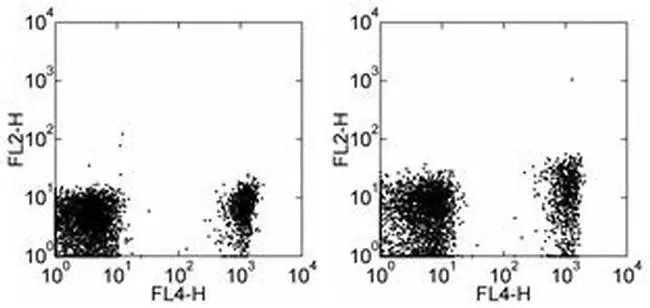
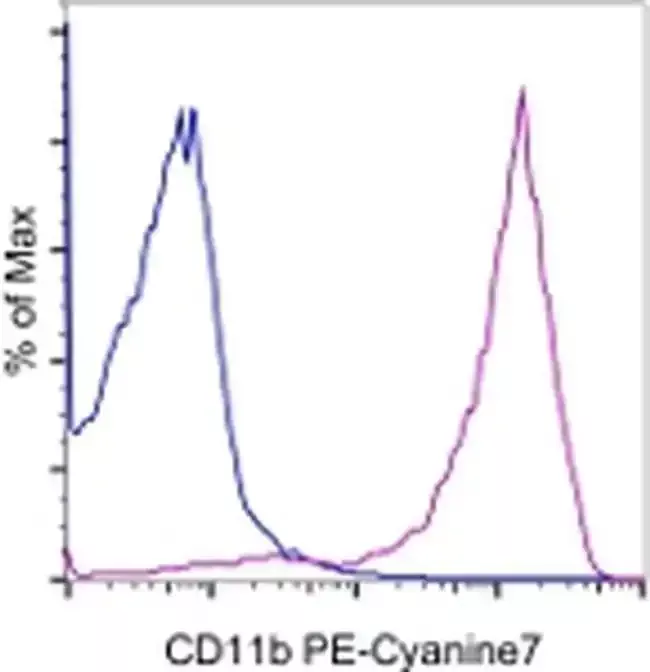
Description: The M1/70 monoclonal antibody reacts with mouse CD11b, the 165-170 kDa integrin alphaM. CD11b non-covalently associates with CD18 to form alphaMbeta2 integrin (Mac-1) and binds to CD54 (ICAM-1), C3bi, and fibrinogen. Mac-1 is expressed by macrophages, NK cells, granulocytes, activated lymphocytes and mouse B-1 cells in the peritoneal cavity. M1/70 is also cross-reactive to human CD11b, and can be used for the detection of this antigen on human peripheral blood monocytes, granulocytes, and a subset of NK cells. Through interactions with its ligands, CD11b participates in adhesive cell interactions. Applications Reported: This M1/70 antibody has been reported for use in flow cytometric analysis. Applications Tested: This M1/70 antibody has been tested by flow cytometric analysis of mouse splenocytes and bone marrow cells. This can be used at less than or equal to 0.125 μg per test. A test is defined as the amount (μg) of antibody that will stain a cell sample in a final volume of 100 μL. Cell number should be determined empirically but can range from 10^5 to 10^8 cells/test. It is recommended that the antibody be carefully titrated for optimal performance in the assay of interest. Light sensitivity: This tandem dye is sensitive photo-induced oxidation. Please protect this vial and stained samples from light. Fixation: Samples can be stored in IC Fixation Buffer (cat.
CD11b (integrin alpha-M, ITGAM, integrin alpha-X, ITGAX) is a 165 kDa adhesion molecule that associates non-covalently with integrin beta-2 (CD18). The CD11b/CD18 heterodimeric complex is also known as integrin alpha-M beta-2, Mac-1, and CR3 (complement receptor 3). CD11b is expressed on the surface of monocytes/macrophages, granulocytes, activated lymphocytes, a subset of NK cells, a subset of dendritic cells, and microglia in the brain. CD11b/CD18 functions as the receptor for ICAM-1 (CD54), ICAM-2 (CD102), ICAM-4 (CD242), CD14, CD50, CD23, heparin, iC3b, fibrinogen, and Factor X -these adhesions are critical for cell-cell and cell-matrix interactions. CD11b is expressed on 8% of spleen cells, 44% of bone marrow cells, and less than 1% of thymocytes, and is commonly used as a microglial marker in nervous tissue. The expression of CD11b increases during monocyte maturation and expression levels vary on tissue macrophages. Further, peritoneal macrophages are reported to express higher levels of CD11b than splenic macrophages. Diseases associated with CD11b dysfunction include systemic lupus erythematosus 6 and ITGAM-related susceptibility to systemic lupus erythematosus. Trusted Sustainability Partner
Suppliers who meet our established requirements for corporate social responsibility
Learn More” alt=”TRUSTED_SUSTAINABILITY” title=”TRUSTED_SUSTAINABILITY” />